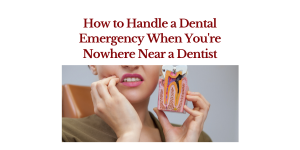
You are halfway through a road trip when your tooth suddenly cracks while eating. The smartest move is to stay calm, control the bleeding or swelling right away, protect the damaged area, and avoid making the situation worse until you can reach professional care.
Dental emergencies don’t happen at a convenient time. A sudden injury during vacation, sharp discomfort while camping, or a knocked-out tooth during a weekend sports game can leave anyone feeling stressed and unsure of what to do next. Acting quickly can significantly help protect your smile and prevent further damage.
In this blog, we will explain how to respond to common dental emergencies when a dentist is not nearby, what supplies can help in the moment, and when it is important to seek immediate professional attention.
Stay Calm and Assess the Situation First
Look for Serious Symptoms
The first thing we recommend is taking a deep breath and checking the severity of the problem. Panic often leads to rushed decisions that can worsen the injury.
Pay close attention to symptoms, such as:
• Heavy bleeding that does not slow down
• Swelling that affects breathing or swallowing
• A loose or knocked-out tooth
• Severe jaw pain
• Signs of infection, such as fever or pus
If breathing becomes difficult or bleeding cannot be controlled, seek emergency medical help immediately.
Clean the Area Gently
Rinse your mouth carefully with warm water to remove debris and bacteria. Avoid aggressive rinsing because sensitive tissue may already be damaged. If you notice swelling, place a cold compress against the outside of your cheek for short intervals.
What to Do for a Knocked-Out or Broken Tooth
Handle the Tooth Carefully
A knocked-out tooth needs fast action. Pick it up only by the crown, which is the visible top part. Do not touch the root.
If the tooth is dirty, rinse it gently with water for a few seconds. Try placing it back into the socket if possible. If that cannot be done safely, keep the tooth in milk or saliva until you can reach a dental office.
Quick action improves the chance of saving the tooth.
Protect a Broken Tooth
A chipped or cracked tooth can leave sharp edges inside the mouth. Rinse gently and cover sharp areas with dental wax if available. Avoid chewing on that side of your mouth.
Even small fractures can worsen without proper emergency dental care, especially if the inner tooth structure becomes exposed.
Managing Pain and Swelling While Away From Home
Reduce Discomfort Safely
Temporary pain relief can help you stay comfortable until treatment becomes available. Over-the-counter pain relievers may reduce inflammation and discomfort when used as directed.
Never place aspirin directly against the gums, as it can irritate the soft tissue.
If you experience persistent tooth pain, avoid extremely hot, cold, or sugary foods, as they may trigger further sensitivity.
Use a Simple Emergency Kit
Traveling with a small dental emergency kit can be surprisingly helpful. We recommend keeping:
- Gauze pads
- Dental wax
- A small container with a lid
- Pain relievers
- Disposable gloves
- Salt packets for rinsing
These items take very little space and can make handling an unexpected problem much easier.
Also Read: How to Help Your Teen Feel Confident While Wearing Braces
How to Handle Lost Fillings, Crowns, or Dental Appliances
Keep the Restoration Safe
If a crown or filling falls out, store it carefully and avoid throwing it away. In some cases, it may still be reusable.
Dental cement from a pharmacy may temporarily hold a crown in place, but this is only a short-term solution. Avoid using household glue or other adhesives.
Protect Sensitive Areas
An exposed tooth can become sensitive quickly. Stick to soft foods and avoid chewing directly on the affected area.
People with missing teeth or existing dental work should also pay close attention to any shifting appliances or irritation during travel because untreated movement can create additional complications.
Know When Professional Care Cannot Wait
Signs You Should Not Ignore
Some dental situations require immediate professional treatment, even if you are far from your regular dentist.
Contact a dental professional as soon as possible if you notice:
• Swelling spreading into the face or neck
• Fever with dental pain
• Continuous bleeding
• A completely knocked out adult tooth
• Difficulty opening your mouth
Prompt emergency dental care can prevent infections, permanent damage, and more complicated procedures later.
Protect Your Smile with Fast Action and Trusted Dental Support
Knowing how to respond during a dental emergency can help you stay calm, reduce discomfort, and protect your oral health until professional treatment is available. Simple steps such as controlling swelling, protecting damaged teeth, and recognizing serious warning signs can make a stressful situation far more manageable.
At Mississauga Family Dentistry, we provide experienced care for urgent dental situations and help patients take quick action when unexpected problems happen. If you or a family member experiences a dental emergency, our team is ready to help you protect your smile with compassionate and professional care.
Contact us today.